
FAITH & WORKS
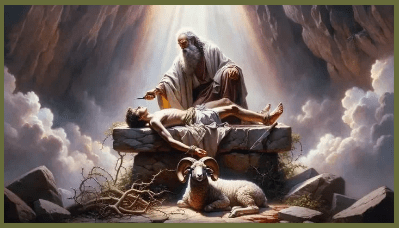
For what saith the Scripture that Abraham believed God
and it was counted unto him as righteousness (dikaiosunen).
Romans 4, 3
Therefore, we conclude that a man is justified (dikaiousthai) by faith
without the deeds of the law.
Romans 3, 28
Was not Abraham our father justified (edikaiosthe) by works
when he had offered his son Isaac up to God on the altar?
James 2, 21
You see then that how by works a man is justified (dikaiotai),
and not by faith only.
James 2, 24 [KJV]
The apostles James and Paul present differing views on the theology of justification, as reflected in their respective New Testament writings. While both contribute valuable insights into the relationship between faith and works, their approaches reflect different contexts and emphases.
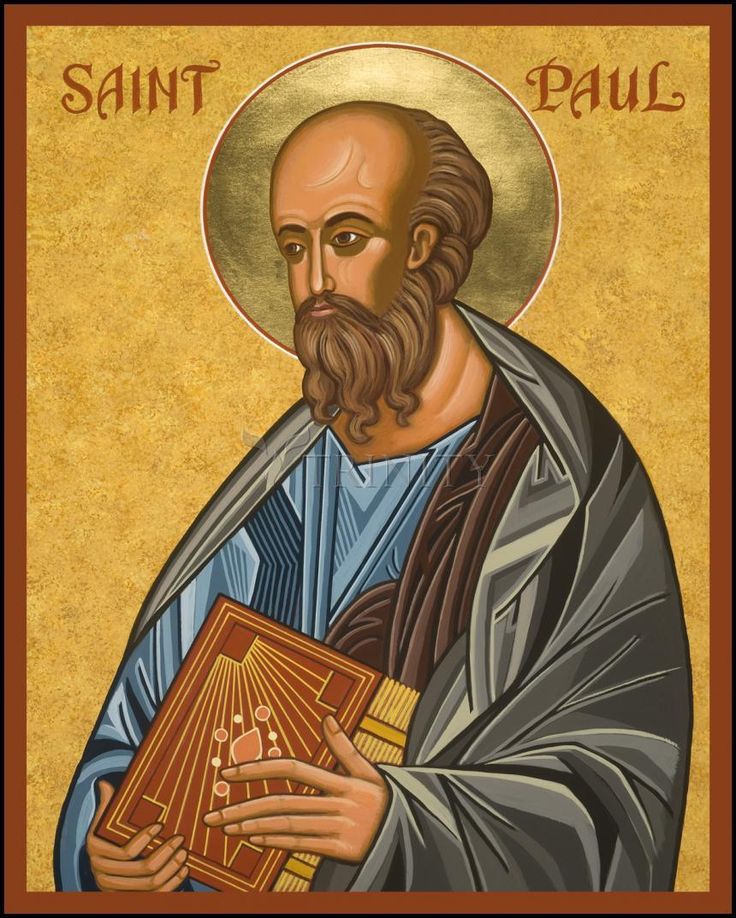
Paul strongly emphasizes justification by faith, particularly in his epistle to the Romans. In Romans 3:28, he proclaims, “Therefore we conclude that a man is justified by faith without the deeds of the law.” This statement encapsulates his theology, which holds that faith in Jesus Christ—rooted in His sacrificial death and resurrection—is the sole means by which believers are justified in God’s sight. Paul asserts that works under the Mosaic law cannot contribute to one’s salvation, since salvation is a gift of grace available through faith (Ephesians 2:8-9). It isn’t something that we are justly entitled to by placing God in our debt, so to speak. His letters frequently emphasize the transformative power of faith and the internal transformation it brings about in a believer’s life.
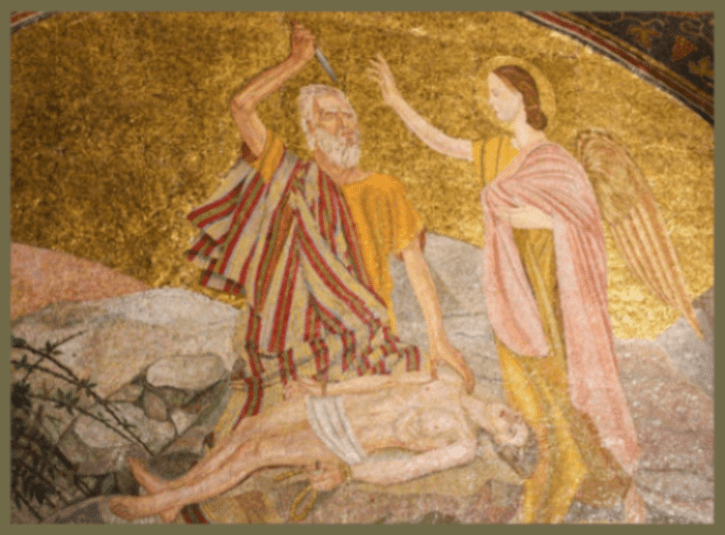
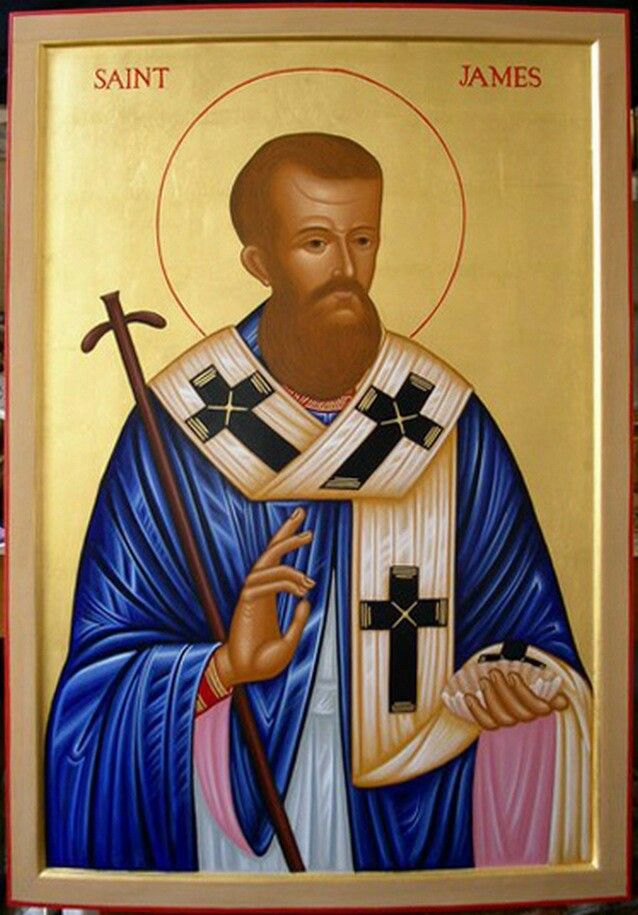
On the other hand, the Epistle of James highlights the importance of works as tangible evidence of genuine faith. In James 2:24, he states, “You see then that a man is justified by works, and not by faith only.” This verse illustrates his belief that faith must be completed in action, thereby validating its authenticity and worth. James uses the example of Abraham’s willingness to sacrifice his son Isaac to demonstrate that faith is completed by obedience and action (James 2:21-22). His emphasis is on the outward expression of faith, suggesting that “faith without works is dead” or incomplete (James 2:26).
Paul and James are not in conflict; rather, they address different facets of the relationship between faith and works. Paul’s doctrine primarily focuses on the initial act of faith that leads to salvation, portraying justification as a legal declaration of righteousness. In contrast, James is concerned with the practical implications of that faith for the believer’s daily life, emphasizing that authentic faith naturally leads to good works done in God’s grace. Therefore, rather than contradicting one another, Paul and James complement one another, painting a more holistic picture of faith’s role in a believer’s life. While justification begins with faith, it inevitably translates into a lifestyle marked by good works that reflect that faith to the world.
By your stubbornness and impenitent heart, you are storing up wrath for yourself on the day of wrath and revelation of the just judgment of God, who will repay everyone according to his works: eternal life to those who seek glory, honour, and immortality through perseverance in good works, but wrath and fury to those who selfishly disobey the truth and obey wickedness.
Romans 2, 5-8
The passage from Romans 2:5-8 addresses the consequences of one’s actions and God’s judgment based on those actions. It emphasizes that individuals who stubbornly resist the truth and continue in wrongdoing are essentially condemning themselves. In contrast, those who seek after righteousness through “perseverance in good works” will receive eternal life. This establishes a foundational theme in Paul’s letters regarding the importance of one’s response to God’s truth and the moral implications that follow.
When we connect this passage in Romans 2 to Romans 4:3, which states, “For what does the Scripture say? ‘Abraham believed God, and it was reckoned to him as righteousness,’” we see an interesting interplay between faith and works. Romans 4 underscores that righteousness comes through faith, not merely by adherence to the prescriptions of the Mosaic Law or through one’s works alone outside the system of grace. Abraham’s belief was credited to him as righteousness, highlighting that trust in God and His promises is a crucial starting point.
Romans 3:28 furthers this exploration by stating, “Therefore, we conclude that a man is justified (dikaiousthai) by faith without the deeds of the law.” In Catholic doctrine, justification is understood as a process involving grace, faith, and works. While the initial act of grace brings justification, it is through faith—specifically, faith in Jesus Christ and acceptance of His sacrifice—that believers enter a reconciliatory relationship with God. The “deeds of the law,” representing the Mosaic Law’s various external requirements, do not, in themselves, bring about righteousness, emphasizing that salvation is a gift freely given by God’s grace.
In the writings of St. Paul, the term “justification” specifically refers to the aspect of God’s gift of salvation that encompasses the forgiveness of sins and the alleviation of guilt. When Paul states that we “have been justified,” he implies that through Christ’s atoning death on the cross, God has forgiven our sins and lifted our guilt, thereby restoring the balance of justice between Himself and humanity. Furthermore, Paul emphasizes that our faith serves as a means of justification, provided that we actively live out this faith by performing good works driven by charity and grace. It is important to note that salvation is conditional; its realization in our lives is contingent upon our cooperation with God’s grace throughout our journey of faith and our commitment through baptism (Eph 2:8-10).
The process of forgiveness and justification is initiated through God’s grace, independent of any merit on our part. Upon receiving baptism, individuals are reconciled with God through the merits of Christ. Following this reconciliation, believers are called to die to sin and resist its influence in their lives by embracing God’s healing grace. This involves a conscious effort to subdue sinful inclinations and selfish desires, and to lead a life characterized by charity and active grace to achieve holiness and righteousness before God. According to Romans 6:10-11, if believers are dead to sin as Christ was, they are justified because, as stated in Romans 6:7, “a dead person has been absolved from sin.” This justification is symbolically represented by being “buried with Christ.”
Therefore, we are not discouraged; rather,
although our outer self is wasting away,
our inner self is being renewed day by day.
2 Corinthians 4, 16
The text from 2 Corinthians 4:16 reflects the Apostle Paul’s understanding of the process of justification and spiritual growth. In this verse, Paul contrasts the decaying state of our outer nature, signifying our physical and temporal existence, with the active renewal of our inner nature, which pertains to our spiritual life. This distinction between the outer and inner nature underscores that justification is not merely a legal declaration but an internal transformation within the believer. The phrase “being renewed every day” emphasizes that this transformation is an ongoing process rather than a singular event. It suggests that justification involves continual growth in faith, hope, and love—three virtues that are foundational to the Christian life.
Furthermore, the idea of ongoing renewal can be understood as an invitation to participate actively in our spiritual development. It implies that as we live out our faith—through prayer, community, and acts of love—we are being shaped and perfected more into the image of Christ. This aligns with the doctrine of sanctification, in which believers are called to grow in holiness and maturity, moving closer to the perfection God desires for His creation. Paul’s message in 2 Corinthians 4:16 highlights that justification is a dynamic journey in which believers experience daily renewal and transformation, ultimately leading them toward spiritual maturity and perfection in Christ. This ongoing process not only reassures believers of their justified status but also motivates them to actively engage in their spiritual growth.
What does it profit, my brethren, if a man says he has faith but
has not works? Can his faith save him? If a brother or sister is
ill-clad and in lack of daily food, and one of you says to them, “Go
in peace, be warmed and filled,” without giving them the things
needed for the body, what does it profit? So faith by itself, if it has
no works, is dead.
James 2, 14-17
You see that a man is justified by works and not by faith
alone. And in the same way was not also Rahab the harlot
justified by works when she received the messengers and sent them
out another way? For as the body apart from the spirit is dead,
so faith apart from works is dead.
James 2:24-26
The passages from James 2:21 and James 2:24 serve as a pivotal reflection on the relationship between faith and works. The focus of these texts is that genuine faith must be manifested in charitable action; that is, faith cannot exist merely as an intellectual assent or religious profession but must be actively lived out through good deeds in God’s grace (cf. Ephesians 2:10). In James 2:14, the question “Can faith save him?” invites a deep exploration of the relationship between faith and works. James is addressing a critical aspect of Christian belief: the nature of true faith. He suggests that mere belief or faith, without accompanying actions, is insufficient for salvation. This idea is rooted in the understanding that salvation is a divine gift from God, not something that can be earned through human effort.
However, James highlights that genuine faith will naturally produce good works as evidence of that faith. The justification he discusses is thus positional, meaning that it relates to one’s standing before God. In essence, it’s not just about having faith in a theoretical sense; it’s about how that faith manifests in tangible actions that reflect God’s love and commands. James contrasts this understanding of faith with a superficial faith that lacks fullness through works. He implies that if someone claims to have faith but does not demonstrate it through their actions, their faith is dead or ineffective. This perspective underscores the importance of faith being active and alive, showing that true belief in God naturally results in a life that reflects that belief through love, kindness, and service to others.
The first passage, “Was not Abraham our father justified (edikaiosthe) by works when he had offered his son Isaac up to God on the altar?” (James 2:21), highlights Abraham as a model of faith made complete by his actions. In the narrative of Abraham, we see that his willingness to sacrifice Isaac was not only an act of obedience but a profound expression of his trust and hope in God. This event illustrates that Abraham’s justification was strengthened through his works, specifically through acts that bear witness to his faith in God’s promise regarding Isaac’s future inheritance.

The subsequent verse, “You see then that how by works a man is justified (dikaiotai), and not by faith only” (James 2:24), reinforces the idea that faith and works are intrinsically linked within the life of a believer. In Catholic theology, this passage aligns with the understanding of justification as a process that encompasses both faith in Christ and the living out of that faith through actions. The Catholic Church teaches that while faith is the starting point of salvation, it must be complemented by love and good works, reflecting Christ’s teachings and responding to His grace (cf. Galatians 5:5-6).
In the book of James, specifically James 4:17, it states that neglecting to perform good works is a sin. This verse strongly emphasizes the importance of actions, indicating that they are a vital component of our justification before God. In James 2:15-17, the apostle provides concrete examples of the kinds of “works” he refers to; these include acts of charity, such as providing food and shelter to those experiencing hardship.
Moreover, in James 1:27, he highlights another significant form of “works”—caring for orphans and widows in distress. This illustrates that true religion involves practical expressions of love and mercy towards those who are vulnerable and in need. The implication is clear: if believers fail to engage in these meaningful actions, their professed faith and religious practices may indeed be rendered meaningless or “in vain.” Thus, James underscores the idea that active participation in good works is essential to living out one’s faith authentically.
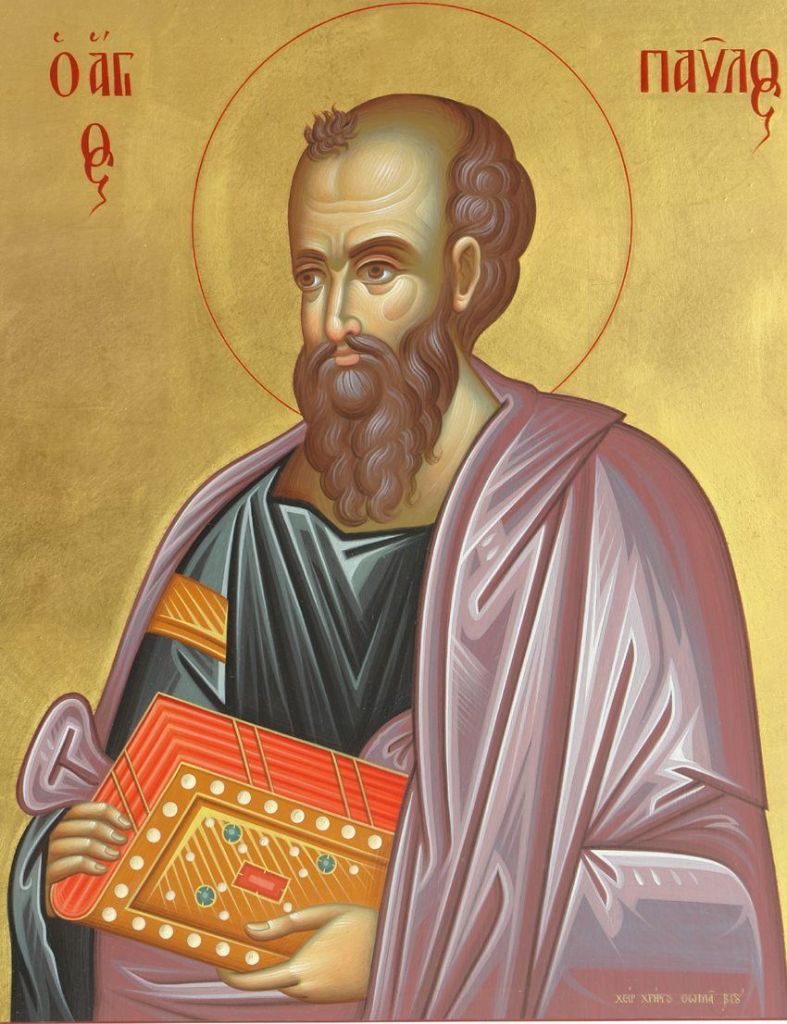
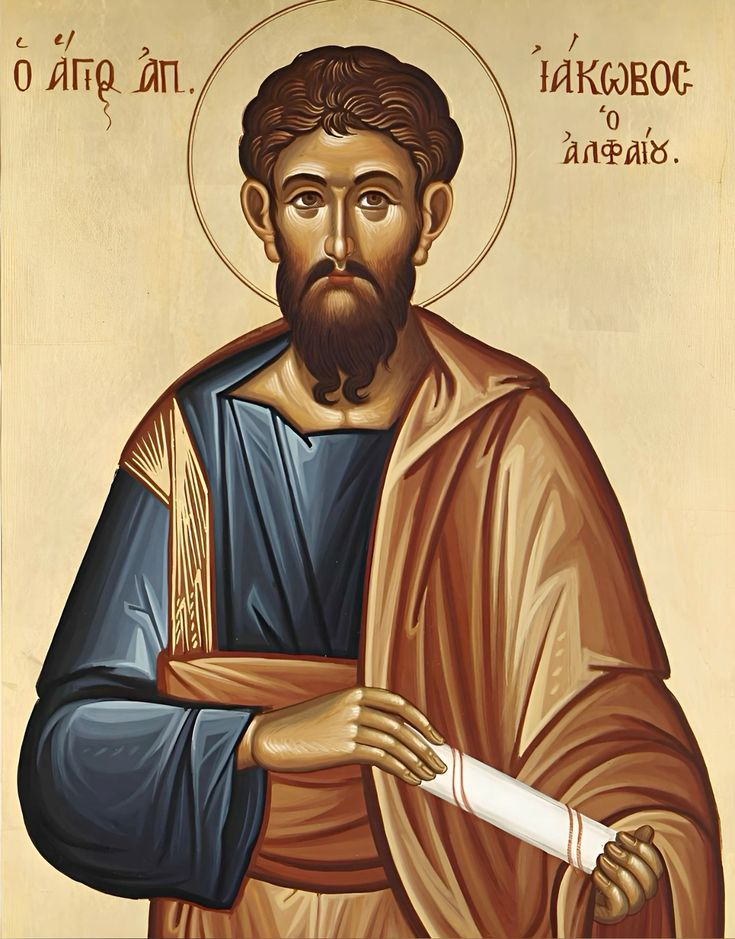
Hence, Paul’s Letter to the Romans and the Letter of James address the relationship between faith and works, but from different perspectives and contexts, which can make them appear to contradict one another at first glance. However, upon closer examination, they reveal a complementary understanding of faith, justification, and the role of works within the framework of unmerited grace.
The writings of James and Paul collectively advocate a comprehensive understanding of faith that goes beyond superficial belief and mere profession. They urge believers to acknowledge that genuine faith is not only a matter of intellectual assent or religious motions but also manifests through tangible actions that align with God’s will and purpose. This dynamic relationship between faith and works is crucial to the Catholic understanding of salvation, emphasizing that faith must be lived out through concrete deeds to be complete and beneficial.
By engaging in acts of charity, justice, and compassion, individuals embody their beliefs and contribute to the greater good of the community. This holistic approach to faith calls for a transformative lifestyle in which believers actively participate in God’s mission, making their faith evident and felt in the world around them and demonstrating a commitment to living out their convictions in a meaningful and impactful way.
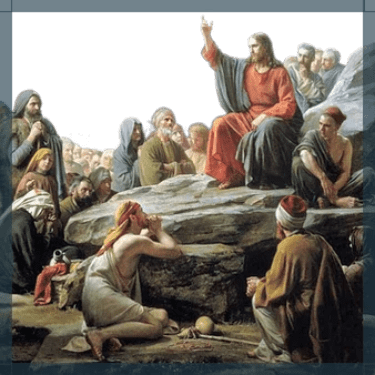
Matthew 5-7
Indeed, in the New Testament, the Apostle Paul uses the phrase “works of the law” (Greek: “ergon nomou“) to refer specifically to the requirements of the Mosaic law, or Torah. This encompasses both the legal and moral teachings and the ceremonial practices established for the Jewish people. Paul’s assertion is that while these works provide Jews with the knowledge of sin, they do not offer a means to escape from sin itself. The Dead Sea Scrolls further illuminate this concept by presenting the Hebrew equivalent, “hrvt ysm,” which translates to “deeds of the law.” This reinforces the idea that the understanding of the law’s works is consistent across different texts of the time.
In contrast, the Apostle James, in his epistle, mentions “works” using the phrase “ergois agathois,” which implies a different type of action or deed. This distinction highlights that Paul’s concept of “works of the law” and James’ use of “works” are fundamentally different. While Paul focuses on the legalistic aspects of the Mosaic law, James emphasizes the moral and ethical actions that demonstrate faith through good deeds. This divergence points to varied theological perspectives within the early Christian community regarding the role of law and works in relation to faith and salvation.
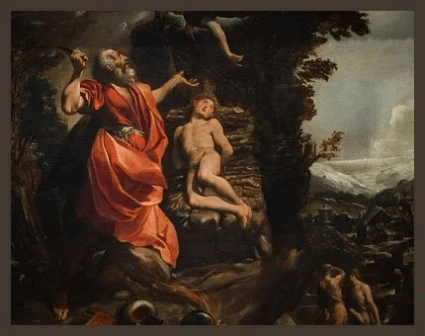
Justification is portrayed as a process in the lives of believers through several key examples, particularly in the story of Abram (later known as Abraham). Abram’s justification begins in Genesis 12:1-4, where God makes a promise to him and indicates that he is justified by his faith. This initial act of faith is just the beginning of his ongoing relationship with God, emphasizing that justification is not limited to a single moment but is part of a larger journey. The mention of Genesis 14, where Abram is blessed by Melchizedek, further illustrates this concept. Abram’s act of giving a tenth of everything shows that his justification is evident in his actions, suggesting a relationship that deepens over time.
In Genesis 15:6, Abram is again considered justified when he believes God’s promise regarding his descendants. While some interpretations present this moment as his initial justification, the text insists that this is a continuation of a process that began years earlier. This is reinforced by Hebrews 11:8-10, which highlights the notion of ongoing faith. Finally, in Genesis 22:1-18, Abraham’s willingness to sacrifice his son, Isaac, is cited as a justification through works. James 2:21-23 emphasizes that true faith is demonstrated through actions, further supporting the idea that justification is an evolving process, a balance between faith and works, rather than a singular event.
Overall, these examples collectively illustrate that justification is intertwined with a believer’s growth in holiness, requiring ongoing faith and works throughout their life rather than being a one-time declaration. This understanding encourages believers to view their spiritual journey as an active, ongoing commitment to living out their faith in both belief and action.
Early Sacred Tradition
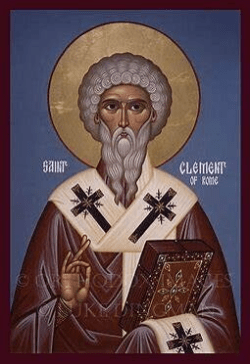
St. (Pope) Clement of Rome (A.D. 98)
Epistle to the Corinthians 30
“Seeing, therefore, that we are the portion of the Holy One, let us do all those things that pertain to holiness, avoiding all evil-speaking, all abominable and impure embraces, together with all drunkenness, seeking after change, all abominable lusts, detestable adultery, and execrable pride … Let us cleave, then, to those to whom grace has been given by God. Let us clothe ourselves with concord and humility, ever exercising self-control, standing far off from whispering and evil-speaking, being justified by our works, and not our words.”
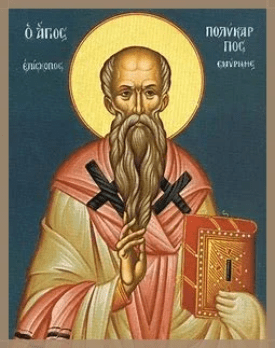
St. Polycarp of Smyrnaea (A.D. 135)
To the Philippians, 2
“But He who raised Him up from the dead will raise up us also, if we do His will, and walk in His commandments, and love what He loved, keeping ourselves from all unrighteousness, covetousness, love of money, evil speaking, false witness; ‘not rendering evil for evil, or railing for railing,’ or blow for blow, or cursing for cursing, but being mindful of what the Lord said in His teaching: ‘Judge not, that ye be not judged; forgive, and it shall be forgiven unto you; be merciful, that ye may obtain mercy; with what measure ye mete, it shall be measured to you again; and once more, “Blessed are the poor, and those that are persecuted for righteousness’ sake, for theirs is the kingdom of God.’”
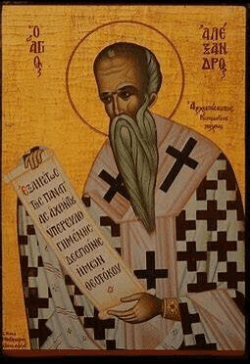
St. Clement of Alexandria (A.D. 202)
The Stromata, 6:14
“‘And other sheep there are also,’ saith the Lord, ‘which are not of this fold ‘–deemed worthy of another fold and mansion, in proportion to their faith. ‘But My sheep hear My voice,’ understanding the commandments gnostically. And this is to be taken in a generous and worthy acceptation, along with the recompense and accompaniment of works. So that when we hear, ‘Thy faith hath saved thee, we do not understand Him to say absolutely that those who have believed in any way whatever shall be saved, unless also works follow. But it was to the Jews alone that He spoke this utterance, who kept the law and lived blamelessly, who wanted only faith in the Lord. No one, then, can be a believer and at the same time be licentious; but though he quit the flesh, he must put off the passions, so as to be capable of reaching his own mansion.”
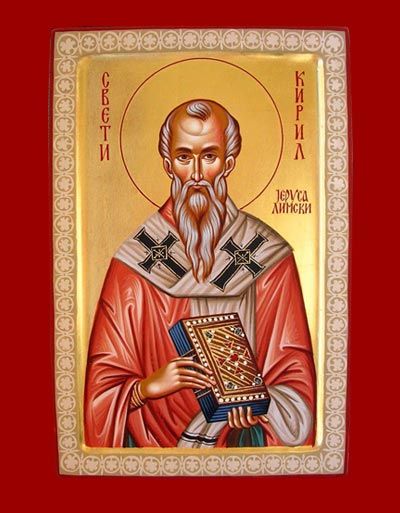
St. Cyril of Jerusalem (C. A.D. 350)
Catechetical Lectures, 15:26
“Terrible in good truth is the judgment, and terrible the things announced. The kingdom of heaven is set before us, and everlasting fire is prepared. How then, someone will say, are we to escape the fire? And how to enter into the kingdom? I was an hungered, He says, and ye gave Me meat. Learn hence the way; there is here no need of allegory, but to fulfill what is said. I hungered, and ye gave Me meat; I was thirsty, and ye gave Me drink; I was a stranger, and ye took Me in; naked, and ye clothed Me; I was sick, and ye visited Me; I was in prison, and ye came unto Me. These things if thou do, thou shall reign together with Him; but if thou do them not, thou shalt be condemned. At once then begin to do these works, and abide in the faith; lest, like the foolish virgins, tarrying to buy oil, thou be shut out.”
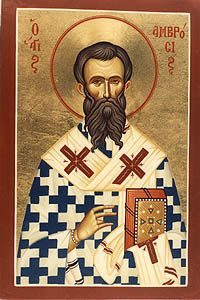
St. Ambrose of Milan (A.D. 380)
On the Christian Faith, II:11, 13
“Now we have a woven work, when faith and action go together. Let none suppose me to be misguided, in that I made at first a threefold division, each part containing four, and afterwards a fourfold division, each part containing three terms. The beauty of a good thing pleases the more, if it be shown under various aspects. For those are good things, whereof the texture of the priestly robe was the token, that is to say, either the Law, or the Church, which latter hath made two garments for her spouse, as it is written’–the one of action, the other of spirit, weaving together the threads of faith and works…. Faith is profitable, therefore, when her brow is bright with a fair crown of good works. This faith–that I may set the matter forth shortly–is contained in the following principles, which cannot be overthrown.”
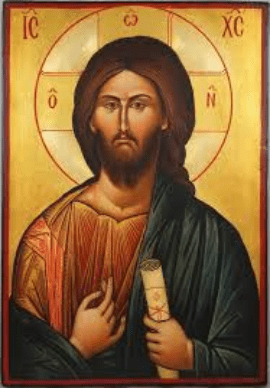
For the Son of man is to come with his angels in the glory of his
Father, and then he will repay every man for what he has done.
Matthew 16, 27
PAX VOBISCUM


Leave a Reply