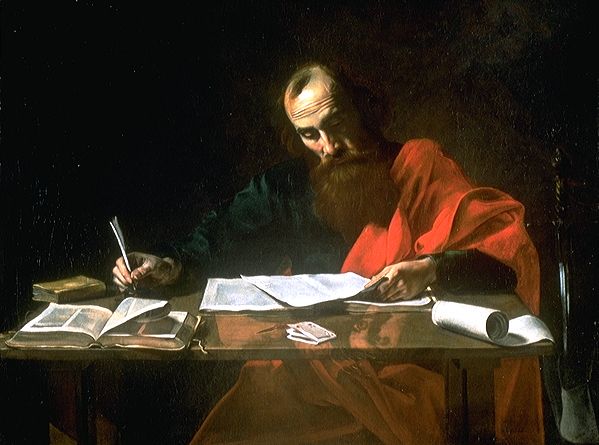
JUSTIFICATION
… There is no partiality with God. Judgment by the Interior Law. All who sin outside the law will also perish without reference to it, and all who sin under the law will be judged in accordance with it. For it is not those who hear the law who are just in the sight of God; rather, those who observe the law will be justified. For when the Gentiles who do not have the law by nature observe the prescriptions of the law, they are a law for themselves even though they do not have the law. They show that the demands of the law are written in their hearts, while their conscience also bears witness and their conflicting thoughts accuse or even defend them on the day when, according to my gospel, God will judge people’s hidden works through Christ Jesus.
Romans 2, 11-16
St. Paul’s Letter to the Romans 2:11-16 presents key themes in Catholic teaching, especially regarding the relationship between moral law, sin, and divine judgment. In this passage, the Apostle emphasizes that true righteousness is determined not just by listening to the moral law, but by actively putting it into practice in one’s daily life. He argues that individuals who adhere to the moral law will be justified before God, emphasizing that this applies to everyone, regardless of their ethnic or religious background. This underscores the universality of God’s law and the idea that all people, whether Jews who received the law directly or Gentiles who may not have received it, are accountable for their actions and will be judged by their obedience to the moral principles inherent in creation. Through this message, Paul reinforces the notion that genuine faith is demonstrated through action and adherence to God’s will.
Paul articulates a significant theological concept concerning the relationship between Gentiles and the Mosaic Law, which is foundational to Jewish identity and religious practice. Although Gentiles are not bound by this formal legislation, Paul asserts that they can still align their lives with the moral principles encapsulated in the law through their innate conscience. This idea is vividly presented in Romans 2:14-15, where Paul explains that even those without the law can act in accordance with its ethical standards, indicating that the essence of the law is written on their hearts. This suggests that a fundamental moral understanding is inherent in all human beings, transcending cultural and religious boundaries. Paul’s perspective emphasizes that moral discernment is not confined to those within the Jewish tradition; rather, it is a universal attribute that enables all people to recognize and respond to ethical truths, highlighting the inclusive nature of God’s moral framework.
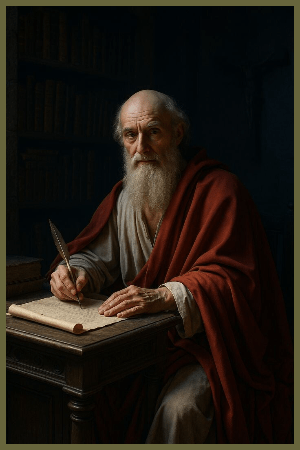
Paul emphasizes that our inner moral compass, often called conscience, guides us in deciding what is right or wrong. It helps us follow ethical standards that align with the law or violate it based on our beliefs. He believes God will judge everyone fairly—not just based on whether they know the law, but on their actions and intentions. This means that all people, whether Jews who have the law or Gentiles who do not, are equally responsible to God for what they do. He points out that true righteousness goes beyond mere compliance with the law; it reflects a person’s character, choices, and true motives. This understanding encourages us to reflect on our actions and commit to a genuine moral path, underscoring that everyone shares responsibility for their behavior.
The text highlights that both individuals who sin without knowledge of the law (the Gentiles) and those who are familiar with the law (the Jews) will face consequences for their actions. This points to a broader concept of accountability, indicating that it encompasses more than just knowledge of the Mosaic law; it also involves one’s behavior and commitment to moral principles. The distinction between merely hearing the law and actively obeying it underscores a fundamental Catholic belief: justification before God is achieved by living in accordance with the law’s demands rather than by mere intellectual assent. This perspective aligns with the Catholic understanding of faith and works, in which the grace received through faith is demonstrated and completed in one’s actions.

Furthermore, Paul addresses the concept of moral accountability by referring to Gentiles who, “by nature,” adhere to the law’s prescriptions. This observation suggests the doctrine of natural law, which posits that certain moral truths are inherent in human nature and discernible through reason and moral intuition. This notion plays a pivotal role in Catholic moral theology, underlining the belief that all individuals possess an innate understanding of right and wrong, independent of their familiarity with specific religious doctrines or sacred texts.
The Catholic Church teaches that natural law is a universal moral framework accessible to all, guiding ethical decision-making and fostering a sense of justice and moral obligation. It emphasizes that the ability to discern good from evil is not exclusive to the faithful but is a shared human experience. This principle reinforces the Church’s view that divine law and natural law complement one another, providing a comprehensive moral guidance that transcends cultural and religious boundaries. On this understanding, the Church advocates universal respect for human dignity and ethical conduct grounded in the common moral truths recognized by all humanity.

Paul addresses the profound role of conscience, emphasizing that God has embedded an internal witness within each individual, guiding them toward moral truth. The Catholic Church teaches that cultivating a well-formed conscience is essential for making sound ethical decisions that align with one’s beliefs and values. This is the result of engaging with moral teachings, personal reflection, and prayerful discernment. The notion that an individual’s thoughts can either serve to accuse or defend them underscores the significance of living authentically and consistently with one’s moral understanding. It suggests that individuals have a responsibility to nurture their conscience so that it aligns with truth and justice, ultimately leading to a more ethical life that reflects their inner convictions.
The belief that God will judge hidden actions through Christ Jesus highlights the concept of a personal and just God. This perspective emphasizes that God not only considers outward behaviors but also understands the intentions and truths within individuals’ hearts. As a result, this belief underscores the significance of integrity and authenticity in one’s life. It encourages people to pursue holiness in their thoughts, words, and actions.

This passage invites Christians to deeply reflect on their understanding of law, morality, and divine justice, urging them to embrace a comprehensive view of faith that transcends mere adherence to rituals or societal norms. It challenges believers to align their actions with both the moral law of God, as revealed in Scripture, and the natural moral order perceived through reason and conscience.
In essence, Romans 2:11-16 emphasizes the principle that God’s judgment is impartial, affecting all people regardless of cultural or religious background. This passage encourages self-examination and highlights the importance of accountability and responsibility. It motivates Christians to express their faith through their actions and to thoughtfully engage with the moral complexities they encounter in their daily lives.
EARLY SACRED TRADITION
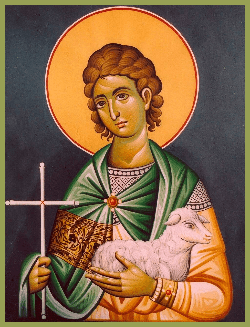
Hermas, The Shepherd of Hermas, Vision 3
(inter A.D. 140-154)
8[16]:3 Hear now their employments. The first of them, the woman with the strong hands, is called Faith; through her are saved the elect of God. 8[16]:4 And the second, that is girded about and looketh like a man, is called Continence; she is the daughter of Faith. Whosoever then shall follow her, becometh happy in his life, for he shall refrain from all evil deeds, believing that, if he refrain from every evil desire, he shall inherit eternal life.” 8[16]:5 “And the others, lady, who be they?” “They are daughters one of the other. The name of the one is Simplicity, of the next, Knowledge, of the next, Guilelessness, of the next, Reverence, of the next, Love. When then thou shalt do all the works of their mother, thou canst live.” 8[16]:6 “I would fain know, lady,” I say, “what power each of them possesseth.” “Listen then,” saith she, “to the powers which they have.” 8[16]:7 Their powers are mastered each by the other, and they follow each other, in the order in which they were born. From Faith is born Continence, from Continence Simplicity, from Simplicity Guilelessness, from Guilelessness Reverence, from Reverence Knowledge, from Knowledge Love. Their works then are pure and reverent and divine.” 8[16]:8 Whosoever therefore shall serve these women, and shall have strength to master their works, shall have his dwelling in the tower with the saints of God.” 9[17]:1 “Hear me, my children. I brought you up in much simplicity and guilelessness and reverence, through the mercy of the Lord, Who instilled righteousness into you, that ye might be justified and sanctified from all wickedness and all crookedness. But ye will not to cease from your wickedness… 9[17]:8 Ye are case-hardened, and ye will not cleanse your hearts and mix your wisdom together in a clean heart, that ye may obtain mercy from the Great King.

Origen of Alexandria, On First Principles 2.9.2
(inter A.D. 220-230 AD)
“For the Creator gave, as an indulgence to the understandings created by Him, the power of free and voluntary action, by which the good that was in them might become their own, being preserved by the exertion of their own will; but slothfulness, and a dislike of labour in preserving what is good, and an aversion to and a neglect of better things, furnished the beginning of a departure from goodness. But to depart from good is nothing else than to be made bad. For it is certain that to want goodness is to be wicked. Whence it happens that, in proportion as one falls away from goodness, in the same proportion does he become involved in wickedness. In which condition, according to its actions, each understanding, neglecting goodness either to a greater or more limited extent, was dragged into the opposite of good, which undoubtedly is evil.”
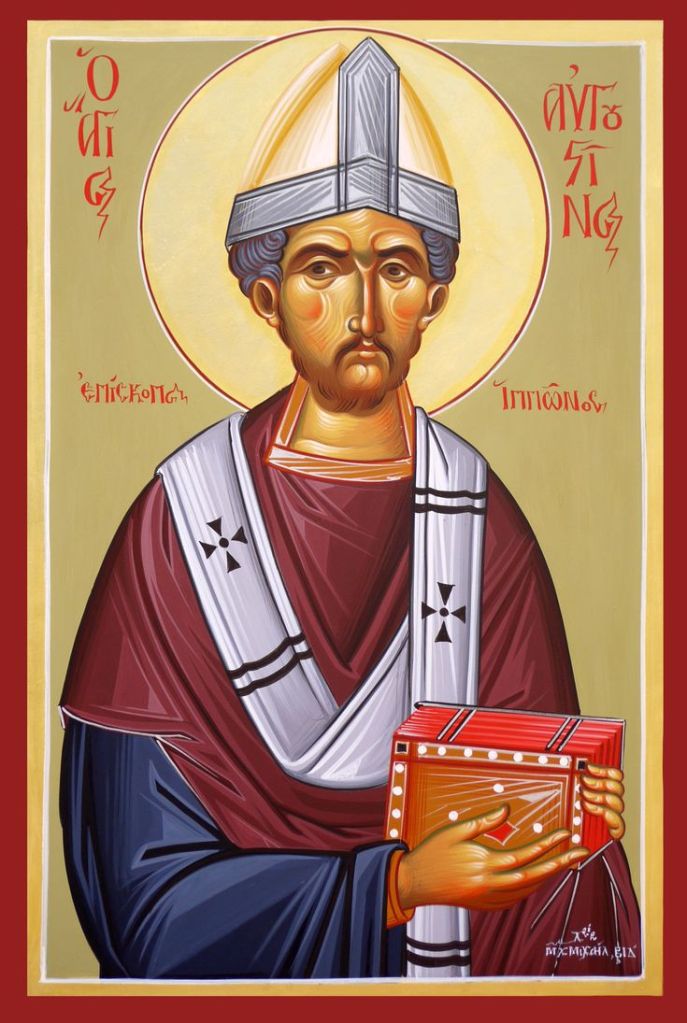
St. Augustine of Hippo, Confessions, Book 8:1
(inter A.D. 395-400)
“Lord, you forced me to face myself, tearing me away from behind my own back—where I had hidden to avoid seeing my own vileness—and you set me before my own face, so I could see how twisted, filthy, and ulcerous I was. I looked, and I was appalled, finding no way to escape myself, and in doing so, my conscience chided me to hate my own iniquity”.
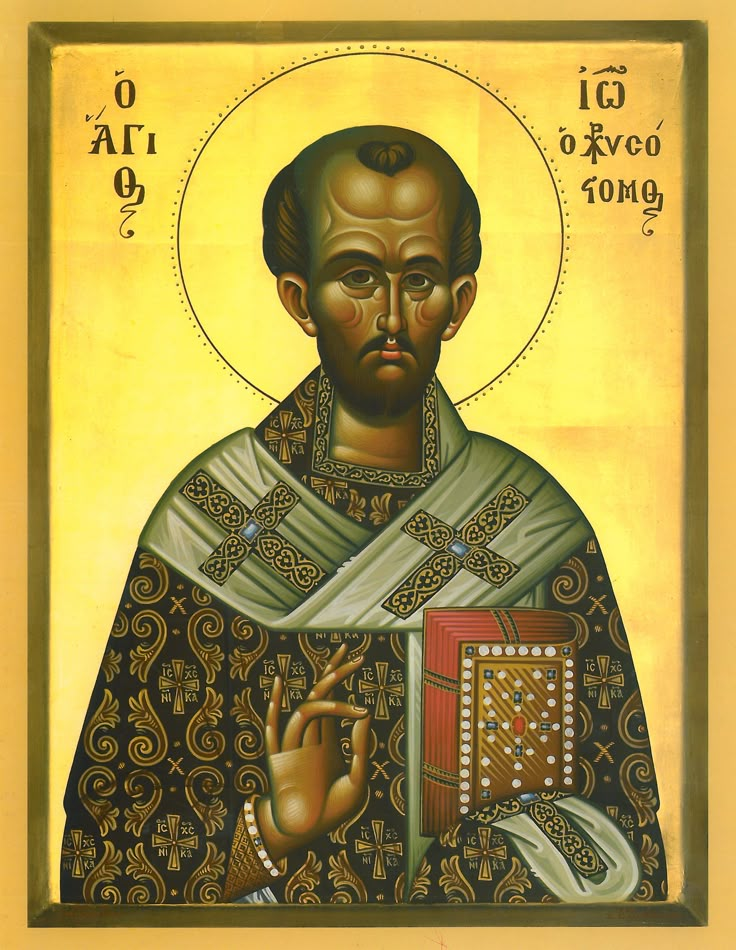
St. John Chrysostom, Sermon on Hebrews 10:2
(A.D. 407)
“Have you seen a man cultivating righteousness, content with his own, and having abundant space for recreation, having anxieties, not fixing his thoughts on things here? Set your eye there, and lift it up on high; and you will make it far the most beautiful, and more splendid, feasting it not with the flowers of the earth, but with those of virtue, with temperance, moderation, and all the rest. For nothing so troubles the eye as an evil conscience (My eye, it is said, was troubled by reason of anger (Psalm 6:7); nothing so darkens it. Set it free from this injury, and you will make it vigorous and strong, ever nourished with good hopes. And may we all make both it and also the other energies of the soul, such as Christ desires, that being made worthy of the Head who is set over us, we may depart there where He wishes. For He says, I will that where I am, they also may be with Me, that they may behold My glory (John 17:24). Which may we all enjoy in Christ Jesus our Lord, with whom to the Father together with the Holy Ghost be glory, might, honor, now and for ever and world without end. Amen”
PAX VOBISCUM

 Just Catholic
Leave a comment